Why Financial Goals Don’t Stick (And How to Fix That)
Ever had good intentions going into a new year?
You sit down, maybe with a coffee or a fresh notebook, and you set out all these goals for the year ahead. Save more. Get organised. Get on top of things.
And then… life happens.
Bills come up. The kids get sick. Work gets busy. Something unexpected breaks.
By March, the goals are forgotten — and you’re left feeling like the problem is you.
It isn’t.
The issue isn’t motivation, discipline, or “not wanting it badly enough”.
The issue is how we’re taught to set financial goals in the first place.
This guide walks you through a more realistic way to set financial goals — one that works with your life, not against it.
Why traditional goal setting fails
Most financial goal setting falls apart for the same reasons:
• We set too many goals at once
• The goals are vague or unrealistic
• They’re based on what we should do, not what we actually want
• There’s no system — just intention
• Life stress isn’t accounted for
When your goals rely on willpower alone, they’re fragile.
When stress hits, they’re usually the first thing to go.
That doesn’t mean you’re bad with money.
It means the approach doesn’t fit real life.
Start with life, not numbers
Before you think about savings targets or debt totals, you need to step back and look at your life as it actually is.
Not the version you hope to have one day — the one you’re living right now.
Ask yourself:
• What feels hardest right now?
• What would make everyday life easier?
• What’s one stress you’d love to reduce or remove?
• Where does money create the most tension or friction?
Financial goals only stick when they solve a real problem.
If your goal doesn’t meaningfully improve your day-to-day life, it won’t stay a priority — no matter how sensible it looks on paper.
Choose one priority (not ten)
This is where most people go wrong.
They try to fix everything at once: saving, investing, paying off debt, budgeting better, cutting spending, planning for the future.
That’s a recipe for overwhelm.
Instead, choose one financial priority — the one that would make the biggest difference right now.
Ask yourself:
• If I could improve one area of my finances, which one would change everything else?
• Which area causes the most stress or mental load?
• What small improvement would give me the most breathing room?
This doesn’t mean you won’t work on other things later.
It means you’re creating momentum instead of pressure.
Brainstorm every possible solution (yes, all of them)
Once you’ve chosen your priority, don’t jump straight to a plan.
First, brainstorm.
Write down every possible way you could achieve this goal — even the ideas that feel unrealistic, unlikely, or slightly ridiculous.
No filtering. No judging.
If your goal is building an emergency fund, that list might include things like:
• Opening a high-interest savings account
• Automating a small weekly transfer
• Selling unused items
• Pausing subscriptions
• Negotiating bills
• Picking up temporary or seasonal work
• Redirecting tax refunds or bonuses
The point of this step is to stop your brain from shutting ideas down too early.
Often the most workable solution comes from an idea that initially felt “too much” or “not for me”.
Filter for what you’d actually stick to
Now go back through your brainstorm and filter it down.
You’re not looking for the perfect solution — you’re looking for the most realistic one.
Ask:
• Which options fit my life as it is right now?
• Which ones require the least ongoing effort?
• Which ones feel sustainable, even on a bad week?
• Which one or two would make the biggest difference?
Circle one or two options only.
More than that and you risk overwhelm again.
Break it into small, concrete steps
Big goals fail when the steps are unclear.
Take your chosen solution and break it down into small, specific actions.
Ask:
• What can I do this week?
• What can be automated?
• What only needs to be set up once?
• What can I simplify?
For example:
Instead of “save more money”, your steps might look like:
• Open a separate savings account
• Set up an automatic transfer
• Move leftover money on payday
• Review progress once a month
These are actions you can take even when life is busy.
Turn it into a SMART goal (without the pressure)
Now you can apply the SMART framework — not as a performance tool, but as a clarity tool.
A strong SMART goal is:
Specific — clear and concrete
Measurable — you can track progress
Achievable — realistic for your circumstances
Relevant — tied to your real life
Time-bound — has a timeframe
For example:
“Build a $1,500 emergency fund by December by saving $30 per week.”
SMART doesn’t mean big or ambitious.
It means clear and doable.
Design for real life
This step matters more than most people realise.
Ask yourself:
• What usually gets in the way of financial plans?
• What happens when I’m stressed, tired, or overwhelmed?
• Where do I tend to fall back into old habits?
Then ask:
• What’s one safeguard I can put in place?
That might be automation, simplifying your accounts, reducing friction, or building in flexibility.
This isn’t about discipline.
It’s about designing a system that holds up when life isn’t ideal.
Write your one-sentence commitment
Finish with one clear sentence:
In 2025, I am committed to __________ because I want to feel __________.
This keeps your goal grounded in purpose, not pressure.
Save it somewhere visible.
It’s a reminder of why this matters — especially when motivation dips.
Final thoughts
If your financial goals haven’t stuck in the past, it doesn’t mean you’ve failed.
It means the method didn’t fit your life.
You don’t need more motivation.
You need clarity, simplicity, and a plan that works in the real world.
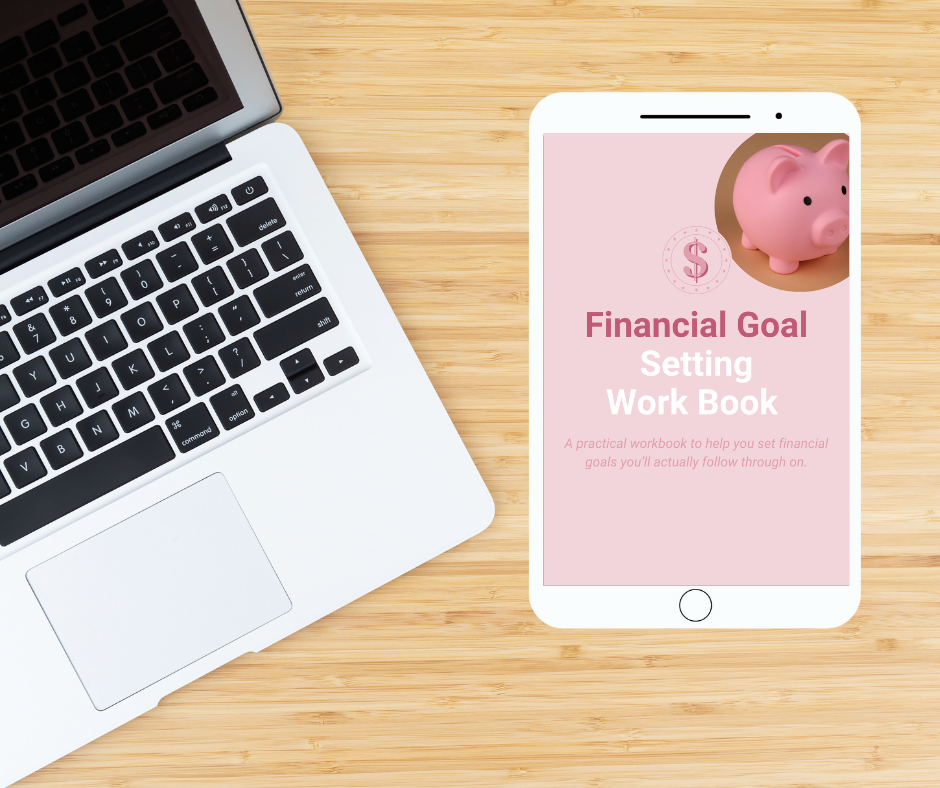
If you’d like help working through this process, you can download the free workbook that goes alongside this post below.